
Abstract: This article presents a student-initiated empirical study conducted at the Lutheran Theological University in Hungary on how members of Lutheran and Methodist congregations read, interpret, and use the Bible in everyday life, ethical reflection, and religious practice. Embedded in courses on Congregational Development and Congregational Pedagogy, the project combined research-based teaching with student-led inquiry. Theology students formulated the research questions, designed a 34-item online questionnaire organised around five thematic areas, collected congregational data, and critically interpreted the findings with faculty guidance. The study situates this process within practical theology’s inductive, experience-oriented approach and the concept of ordinary theology, viewing congregational members’ interpretations as valuable theological knowledge. The survey received 278 responses, predominantly from Lutheran and Methodist
participants. The findings indicate strong confidence in biblical authority alongside considerable hermeneutical plurality. Sixty-two per cent regarded the Bible as inspired and without error while allowing symbolic rather than strictly literal interpretation, whereas literalism represented a minority position. Nearly one quarter identified as religious “in their own way,” signalling the presence of individualised spirituality within denominational communities. Participation in Bible study groups was uneven, with only about one third attending frequently or regularly, while regular Bible reading generally increased with age. Digital resources nevertheless appear to facilitate younger participants’ engagement with Scripture. These results highlight the need for dialogical preaching, smallgroup learning, renewed forms of communal hermeneutics, and responsible digital pedagogy. Because the online, selfselected sample was non-representative and somewhat youthskewed, the results identify tendencies rather than permit generalisation. The study concludes that empirical inquiry can connect theological theory with congregational reality while developing students’ critical reflection, hermeneutical sensitivity, and ministerial competence.
Keywords: Practical theology, student-initiated research, Bible, Congregational pedagogy, empirical research

Related Posts
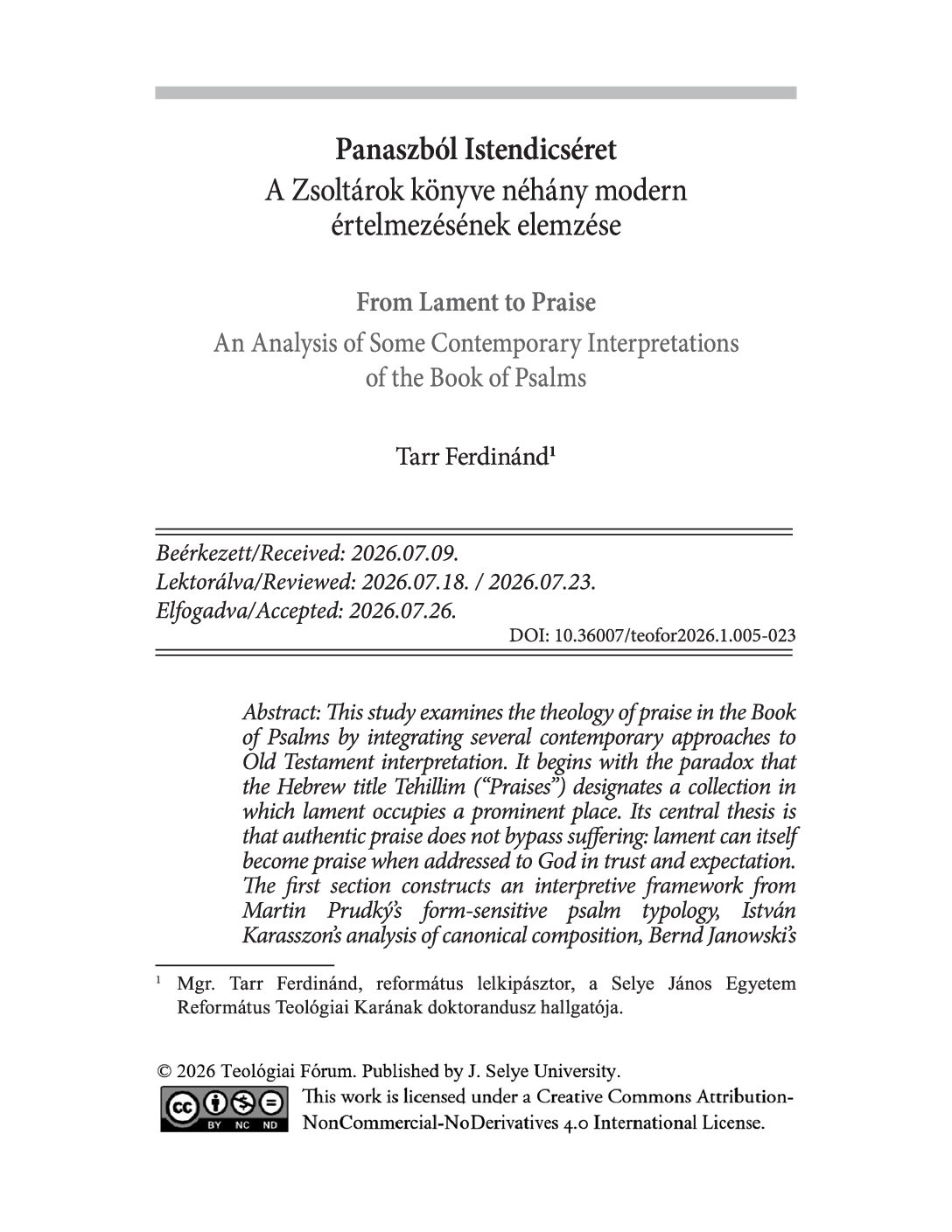
Tarr Ferdinánd. Panaszból Istendicséret A Zsoltárok könyve néhány modern értelmezésének elemzése
Tarr Ferdinánd. Panaszból Istendicséret A Zsoltárok könyve néhány modern értelmezésének elemzése Abstract: This study examines the theology of praise in the Book of Psalms by integrating several…
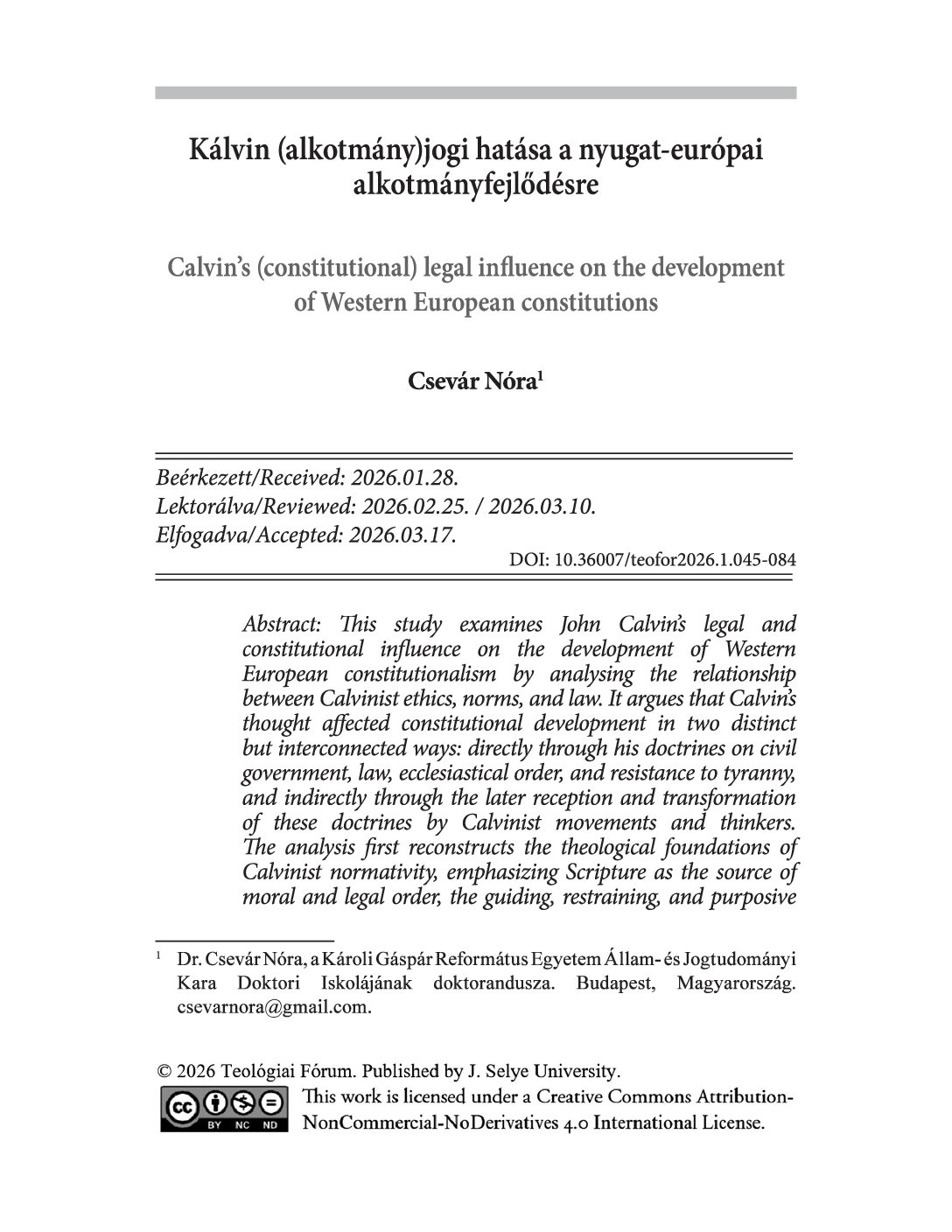
Csevár Nóra. Kálvin (alkotmány)jogi hatása a nyugat-európai alkotmányfejlődésre
Csevár Nóra. Kálvin (alkotmány)jogi hatása a nyugat-európai alkotmányfejlődésre Abstract: This study examines John Calvin’s legal and constitutional influence on the development of Western European constitutionalism by analysing…
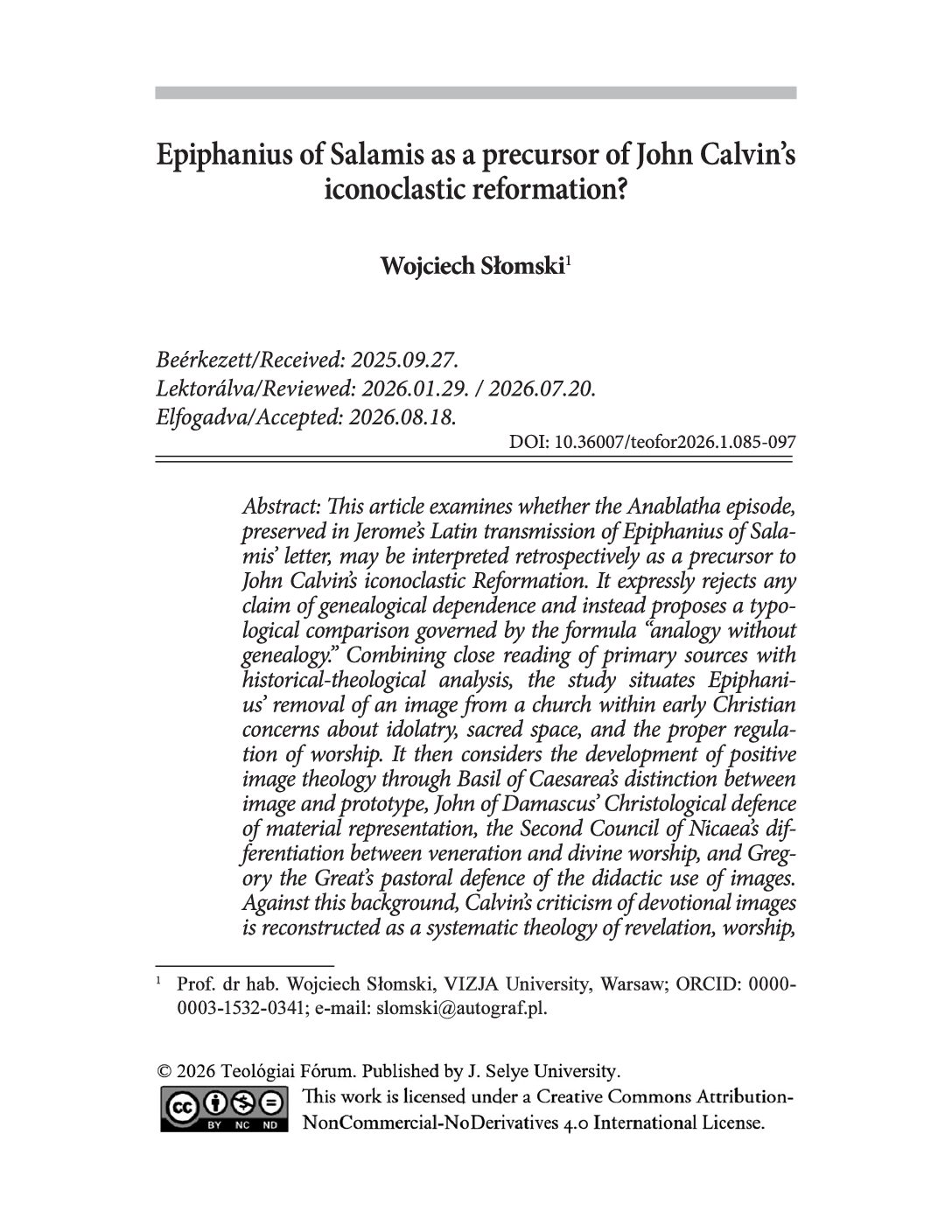
Wojciech Słomski. Epiphanius of Salamis as a precursor of John Calvin’s iconoclastic reformation?
Wojciech Słomski. Epiphanius of Salamis as a precursor of John Calvin’s Abstract: This article examines whether the Anablatha episode, preserved in Jerome’s Latin transmission of Epiphanius of…
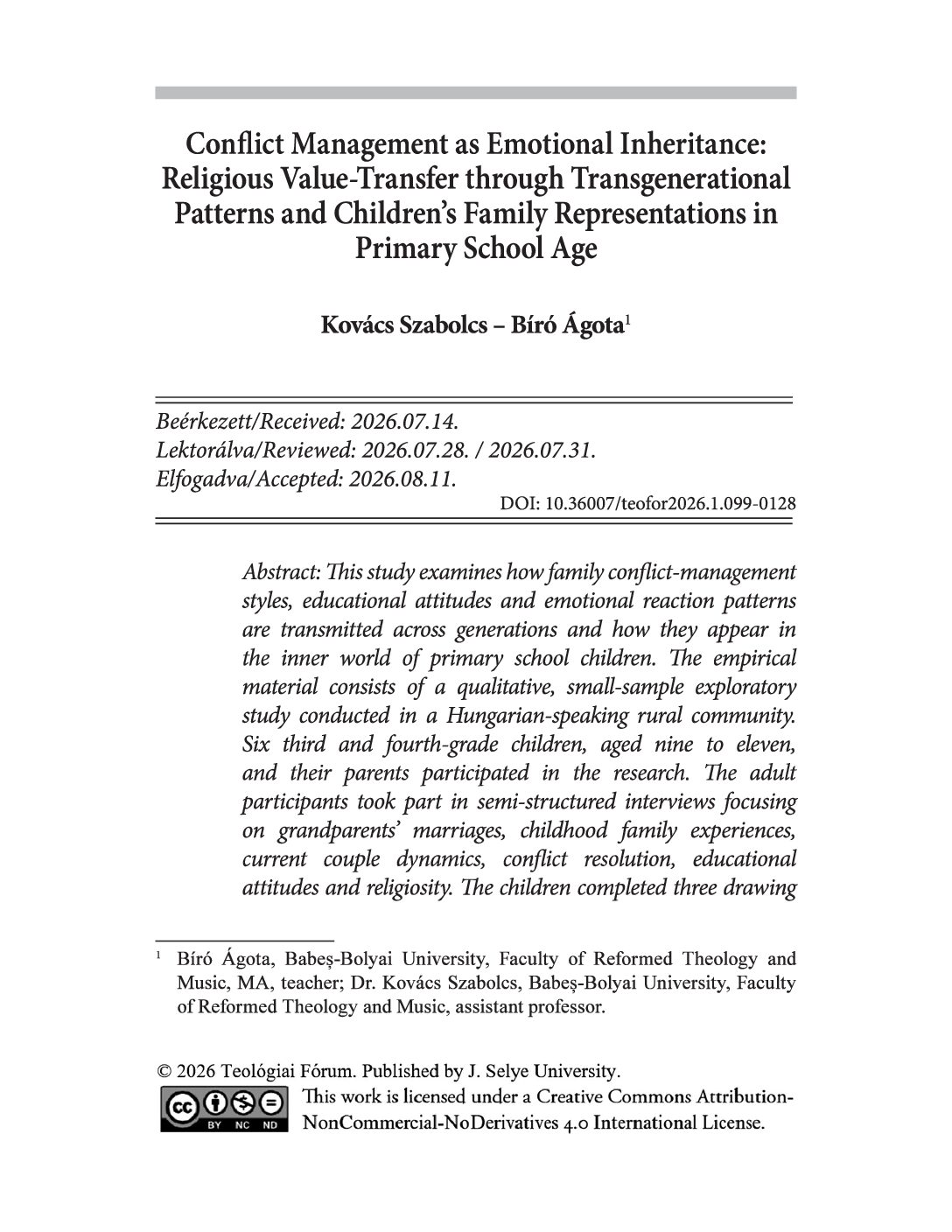
Conflict Management as Emotional Inheritance Religious Value Transfer through Transgenerational Patterns and Children’s Family Representations in Primary School Age
Kovács Szabolcs – Bíró Ágota. Conflict Management as Emotional Inheritance Abstract: This study examines how family conflict-management styles, educational attitudes and emotional reaction patterns are transmitted across…


